


3M 7303 Anisotropic Conductive Film (ACF) for Flexible Printed Circuit (FPC) Interconnection
Features
1. Selective Conductivity: Provides excellent electrical interconnection through the adhesive thickness (Z-axis) while remaining electrically insulating in the plane (XY-axis) to prevent short circuits.
2. Advanced Material System: Consists of an epoxy/acrylate blend adhesive with 43-micron silver-coated glass beads, offering reliable performance on copper traces.
3. User-Friendly Processing: Slightly tacky at room temperature for easy handling and pre-positioning; cures at modest bonding temperature and pressure.
4. Robust Mechanical & Electrical Performance: Delivers low interconnection resistance (<0.2 Ohms) and high peel strength (≥500 gf/cm).
5. High Reliability: Withstands rigorous environmental stress, including temperature cycling from -40°C to 80°C and high-temperature/humidity conditions.6.450°F (232°C) short-term heat endurance.
|
Product name |
3M 7303 Anisotropic Conductive Film (ACF) for Flexible Printed Circuit (FPC) Interconnection |
|
Backing material |
Conductive Adhesive Film with Release Liners |
|
Adhesive Type |
Epoxy |
|
Product Color |
Brown |
|
Maximum Operating Temperature |
80℃ |
|
Minimum Operating Temperature |
-40 ℃ |
|
Shear Strength |
7.1 psi |
|
Shelf Life |
18 months |
Recommended Applications:
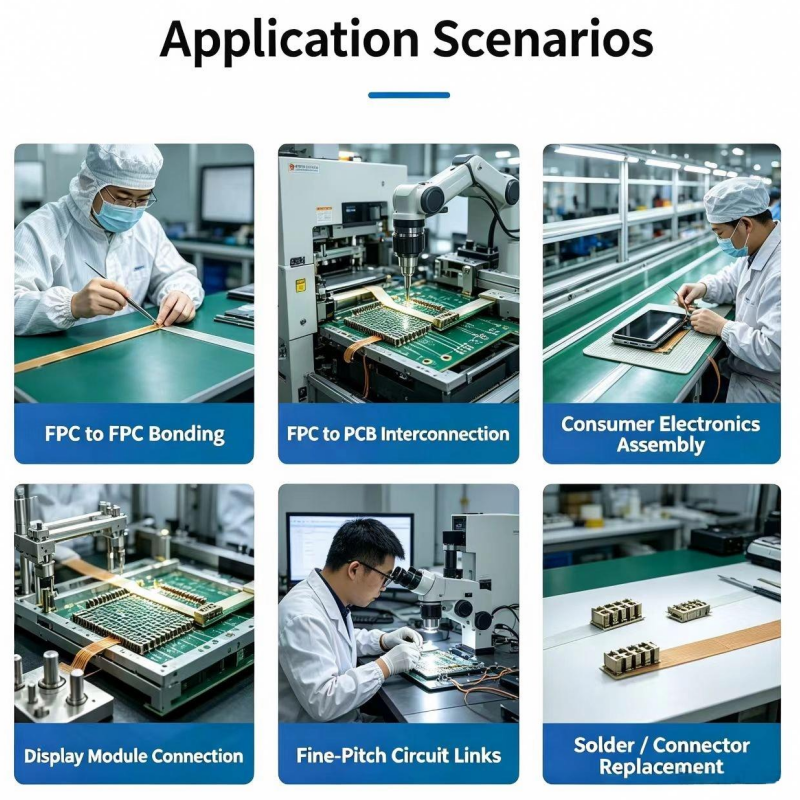
1. Bonding flexible printed circuits (FPC) to other flexible printed circuits (FPC-to-FPC).
2. Interconnecting flexible printed circuits to rigid printed circuit boards (FPC-to-PCB).
3. Fine-pitch circuit connections in consumer electronics (e.g., smartphones, laptops, cameras).
4. Display module assembly and electronic component lightweight interconnection.
5. Lead-free soldering or connector replacement for micro-electronic assemblies.
When you can consider 3M ACF 7303:
1. When you need to bond FPC to FPC or FPC to PCB without soldering or connectors.
2. When circuit pitch is fine (down to ~250 µm) and traditional solder joints are difficult to produce.
3. When you require Z-axis conductivity only: conductive through thickness, insulating in the plane to prevent short circuits
4. When the final application is within -40℃ to 80℃ operating range and storage can be kept dry at <25°C to maintain the 18-month shelf life
5. When you need a thin, lightweight, reliable electrical connection that supports roll-to-roll or panel-level automated lamination
When to consider alternatives or other 3M models:
1. If pitch is below the recommended minimum or current-carrying capacity is high, re-check with 3M or consider soldering/connectors
2. If only mechanical fastening is required and no electrical conduction is needed, a standard adhesive tape is sufficient
All technical data and application recommendations provided are for general reference only. Since actual performance may vary depending on application methods, substrates, and environmental conditions, end users should perform their own validation and testing to confirm suitability for their intended use.
-

3M 2228 Scotch Rubber Mastic Tape for Moisture-...
-

3M Scotch 2220 Electrical Stress Control Tape f...
-

3M 766 Safety Stripe Vinyl Yellow and Black Tap...
-

3M 93010/93020 300LSE Adhesive Double Coated PE...
-

3M Scotch 13 Electrical Semi-Conducting Tape &#...
-

Strong Visibility 3M 983D Red and White Reflect...


